
Responsibility is in our essence: LENZING™ ECOVERO™ strengthens its brand identity
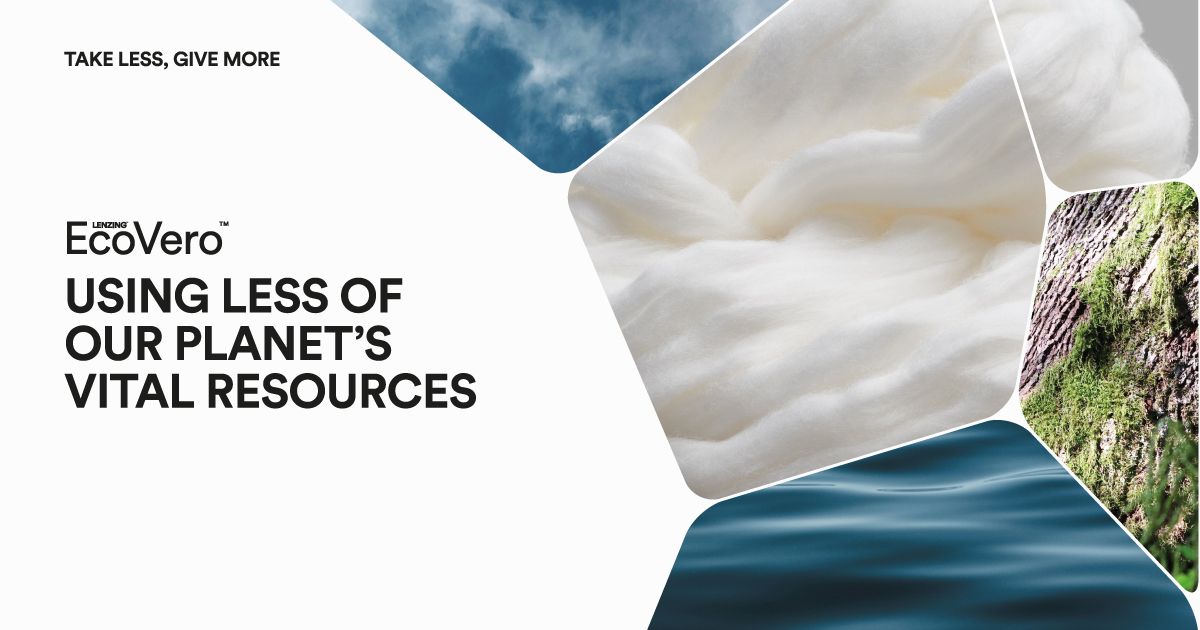
The first viscose to achieve the EU Ecolabel [1] sharpens its brand story around partnership, transparency and collaborative innovation.
By taking cellulose, the essence of plants, and turning it into versatile fibers for the textiles people wear and live with every day, Lenzing created LENZING™ ECOVERO™, a viscose designed from the outset for environmental excellence. [1] In 2017, when it launched, it became the first viscose to earn the EU Ecolabel. [1] Nearly a decade later, it remains the only viscose brand to hold this distinction from inception.
With this proven track record, the brand is now evolving its identity: “Responsibility is in our essence” introduces a sharper narrative, refreshed visuals and a redesigned ecovero.com that bring the brand’s legacy and its growing role in everyday textiles into clearer view.
“As more brands position themselves as responsible, partners and consumers are looking more closely at which ones can prove it,” explained Eva McGeorge, Senior Global Director Marketing & Branding, Commercial Textiles at Lenzing. “Even well-established brands need their identity to keep pace with the progress they’ve made. The substance was always there. This is about making it more visible for partners and consumers who want to know what stands behind the fiber.”
Our Essence
At the center of the evolution is “Our Essence”, an idea drawn from both the plant cells that form the fiber and the deeper promise that has guided the brand from the start: take less from the environment, give more back through better choices.[2] [3] The science and the purpose have always been one and the same. To visually capture this relationship, the brand design mimics the cellulose structure of wood, resulting in an aesthetic that is technical yet natural, with an inviting, softer character.
“We wanted the brand to fully embody that promise from day one,” said Irene Fung, Brand Manager for LENZING™ ECOVERO™. “This step is driven by data; it’s about keeping things meaningful for partners who value trust, legacy and sustainability.”
Designed for partners
For mills, brands and retailers facing growing expectations around climate, resources and traceability, LENZING™ ECOVERO™ remains a star ingredient that delivers without compromising on comfort, hand feel or aesthetics. The fibers blend readily with cotton, polyester, wool, silk, linen and other fibers, with production in Austria, China and Indonesia in particular and supply through hundreds of yarn spinners across major textile markets. The responsible fiber portfolio also offers a comprehensive range of linear densities and cut lengths to suit diverse production needs.
For partners prioritizing circularity, LENZING™ ECOVERO™ fibers produced with REFIBRA™ technology incorporate a minimum of 20% recycled pulp from pre- and post-consumer textile waste, transforming waste that might otherwise reach landfill into new fiber. [4] LENZING™ ECOVERO™ black fibers take efficiency further through spin-dyeing, locking color in during production to deliver vibrant, long-lasting black alongside up to 50% less energy and water consumption and up to 60% lower carbon footprint compared to conventional dyeing. [5]
Built-in fiber identification technology supports traceability even in finished garments, and the multilingual Lenzing Pro portal (lenzingpro.com) provides teams with round-the-clock access to specifications, application guidance and technical support.
With this evolution, LENZING™ ECOVERO™ makes its commitment to responsible production more visible and more accessible across the value chain.
[1] LENZING™ ECOVERO™ Viscose has achieved the EU Ecolabel for textile products (license no. AT/016/001) in recognition of environmental excellence. It is the first viscose brand to have achieved this since its inception.
[2] The wood and pulp used as a raw material in the production of LENZING™ ECOVERO™ Viscose fibers are sourced from certified or controlled wood sources. Certification: FSC® (FSC-C041246) or PEFC (PEFC/06-33-92).
[3] LENZING™ ECOVERO™ fibers are made using at least 50% less water and generate half the carbon emissions compared to generic viscose. Results based on LCA standards (ISO 14040/44) and available via Higg MSI Version 3.11 (Nov 2025).
[4] LENZING™ ECOVERO™ fibers produced with REFIBRA™ technology use textile waste as a raw material, in addition to wood. The fibers contain a minimum of 20% recycled material, sourced from pre- and post-consumer waste. Certification: Recycled Claim Standard (RCS) Certificate, Control Union Shanghai (CU1260548).
[5] Compared to conventional dyeing methods. Results based on Terinte et al. (2014), Journal of Cleaner Production, Vol. 72: 127–138. Savings based on calculations of fabric production and dyeing via jet dyeing, excl. fiber impact.